
connection
I
resilience
I
dignity
I
belonging
I
awareness
I
presence
I
connection I resilience I dignity I belonging I awareness I presence I
Somatic Coaching
Somatic principles are the foundation of how we slow down, listen, and practice with and within ourselves, and in relationship. Somatic coaching offers collaboration for cultivating embodied awareness, resilience, and choice.
Somatics holds that change happens at the speed of trust. A commitment to 10 sessions reflects the spaciousness needed for embodied change to emerge.
This work is relational, iterative, and grounded in the belief that sustainable change happens when the body is dignified as a source of intelligence and wisdom.
Somatic Bodywork
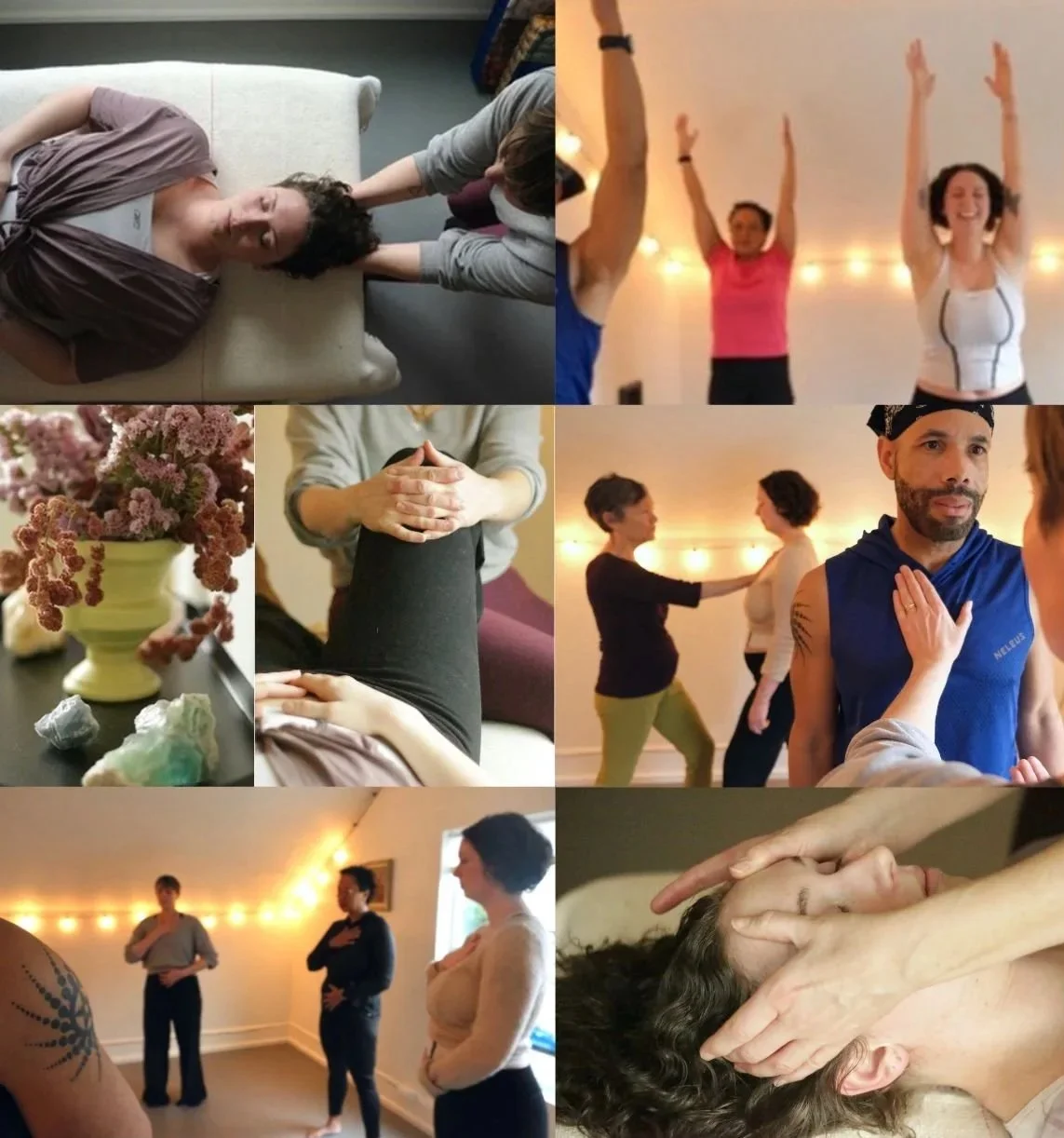
Somatic bodywork is a gentle, hands-on, fully clothed process that supports nervous system regulation, awareness, integration, and embodied change.
Rather than focusing on "fixing" the body, this work engages the body by listening to patterns of tension, breath, posture, and movement that reflect how you've learned to meet and be in the world.
-
Coaching sessions are 60 or 90 minutes in length and are led by a theme or topic brought in by you, the client. Topics may change from session to session and are held in a container of connection to the overarching theme or goal of our 10-session arc.
The session will allow for intentional exchange (talking time) that might explore posture, breath, habits, moods, patterns of action, relationships, roles, values, resilience, current conditions, and /or survival strategies.
A more significant portion of the session will allow for intentional practice or process followed by a closing debrief, highlights & take-aways, intentions for supportive practice, and next steps.
-
The first portion of the 90-minute session will allow for intentional exchange (talking time) that might explore posture, breath, habits, moods, patterns of action, relationships, roles, values, resilience, current conditions, and /or survival strategies.
We will then move into 45-minutes of bodywork on a raised bodywork table or on a ground level bodywork pallet. We will end our time by returning to our session focus, discussing emerging sensation and awareness, highlighting take-aways, and setting intentions for supportive practice, new commitments, and next steps.
These sessions are collaborative and responsive, supporting greater ease, resilience, and choice in how you move, feel, and act in daily life.
All touch is guided by consent, presence, and close attention to your body's cues and comfort.
-
The benefits of somatic coaching and bodywork are connection with one’s body, breath, language, and action for greater presence, integrity, and skillful engagement.
Over time, we repeatedly embody habits, reactions, ways of relating, and patterns of action that can then feel “normal” or inevitable, even when they no longer align with our values or vision.
Somatic work supports awareness of these patterns and creates space for new possibilities to emerge.
By working at the level of embodied experience, somatic bodywork supports more choice, capacity to be with emotions, and alignment—personally and collectively—opening pathways toward liberation rather than survivals’s rooted repetition.
what to expect in your private session
Session Flow
Ground in connection. Current conditions. Topic for the session. Practice or process for the sake uncovering, deepening, creating awareness. Debrief. Completion.
Client responsibility
You agree to arrive on time or communicate delay. You agree to come prepared with the focus topic for the session. You agree to communicate boundaries and requests for open communication.
Instructor responsibility
I commit to prioritizing safety, consent, and clear communication. I will remain connected to the overarching theme of our 10-session arc while maintaining focus within the current topic. I commit to embodied presence and groundedness for the sake of connection.
Plan with Purpose
Please arrive 5 minutes early when possible. Wear comfortable, movement friendly clothing. Tea and water are available in the studio. Late arrival may shorten the session. 24 hours notice is requested for cancellation.